 |
| Home | Contact |
L-Lysine monohydrochloride or Lysine Hydrochloride or 2,6-Diaminohexanoic acid monohydrochloride or L-Lysine HCl SDS Safety Data Sheet of Supplier Exporter Manufacturers' Representative |
| Email: info@ammol.org |
| Call Toll Free +1-855-552-6665 Toll Free: 1-855-55-AMMOL |
L-Lysine monohydrochloride or Lysine Hydrochloride or L-Lysine HCl
CAS Number: 657-27-2
Molecular Formula: C6H14N2O2-HCl or H2N(CH2)4CH(NH2)CO2H-HCl
Molecular Weight: 182.65
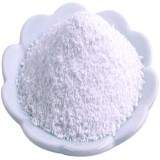
L-Lysine monohydrochloride or Lysine Hydrochloride or L-Lysine HCl
L-Lysine monohydrochloride SDS, Safety Data Sheet
MSDS Sheet, Material Safety Data Sheet 11-Feb-26
Section 1: Chemical Product Identification
Product Name & Other Names: L-Lysine monohydrochloride or Lysine Hydrochloride or 2,6-Diaminohexanoic acid monohydrochloride or 2,6-Diaminohexanoic Acid Hydrochloride.
CAS#: 657-27-2
EINECS EC Number: 211-519-9
Molecular Weight: 182.65
Chemical Formula: C6H14N2O2-HCl or H2N(CH2)4CH(NH2)CO2H-HCl
Relevant uses and uses advised against (if any): Industrial Manufacturing.
Supplier: American Molecules, 9910 Bent Oak Dr, Houston, TX 77040, USA.
Call Toll Free: 1-855-55-AMMOL 1-855-552-6665.
In case of emergency contact: Will be given with the supply.
Section 2: Hazards Identification
GHS, Globally Harmonized System Classification in accordance with 29 CFR 1910
Classification according to Regulation (EC) No 1272/2008
Not a hazardous substance or mixture according to Regulation (EC) No. 1272/2008.
This substance is not classified as dangerous according to Directive 67/548/EEC.
Labeling according to GHS & Regulation (EC) No 1272/2008
GHS Label Elements None |
Signal Words: None
Precautionary statements:
P261: Avoid breathing dust/fume/gas/mist/vapors/spray.
P262: Do not get in eyes, on skin, or on clothing.
P281: Use personal protective equipment as required.
P303+P361+P353: IF ON SKIN (or hair): Remove/Take off immediately all contaminated clothing. Rinse skin with water/shower.
P304+P340: IF INHALED: Remove victim to fresh air and keep at rest in a position comfortable for breathing.
P305+P351+P338: IF IN EYES: Rinse cautiously with water for several minutes. Remove contact lenses, if present and easy to do. Continue rinsing.
P337+313: If eye irritation persists get medical advice/attention.
Section 3: Composition and Information on Ingredients
Product Name/Synonyms: L-Lysine monohydrochloride or Lysine Hydrochloride or 2,6-Diaminohexanoic acid monohydrochloride or 2,6-Diaminohexanoic Acid Hydrochloride.
CAS#: 657-27-2
EINECS EC Number: 211-519-9
Section 4: First Aid Measures
Always get medical attention after the first aid is over.
Eye Contact: Check for and remove any contact lenses. In case of contact, immediately flush eyes with plenty of water for at least 15 minutes. Get medical attention if irritation occurs.
Skin Contact: Wash with soap and water. Cover the irritated skin with an emollient. Get medical attention if irritation develops.
Inhalation: If inhaled, remove to fresh air. If not breathing, give artificial respiration. If breathing is difficult, give oxygen. Get medical attention.
Ingestion: Do Not induce vomiting unless directed to do so by medical personnel. If large quantities of this material are swallowed, call a physician immediately. Loosen tight clothing.
Notes to Physician: Provide general supportive measures and treat symptomatically.
Section 5: Fire and Explosion Data
Flammability of the Product: Not classed as fire hazard but it may be combustible at high temperature.
Auto-Ignition Temperature: Not available.
Products of Combustion: Oxides of carbon, hydrogen chloride, nitrogen and ammonia along with fumes .
Fire Fighting Media and Instructions: Use DRY chemical powder, water spray, carbon dioxide, fog or foam. Do not use water jet. In the event of a fire, wear full protective clothing and NIOSH-approved self-contained breathing apparatus with full face piece operated in the pressure demand or other positive pressure mode. At high temperatures under fire conditions, it may produce toxic or irritating fumes. Fire-extinguishing work is done from the windward and the suitable fire-extinguishing method according to the surrounding situation is used.
Section 6: Accidental Release Measures
Personal precautions, protective equipment and emergency procedures: Avoid breathing dust/fumes/gas/mist/vapors/spray. Ensure adequate ventilation. Use individual protective equipment (waterproof boots, suitable protective clothing, safety glasses, etc.). Restrict unprotected personnel from the area. Prevent any contact with hot surfaces. Do not approach facing the wind.
Environmental precautions: Do not let the product enter drains, soil or water sources.
Methods and materials used for containment Cleanup procedures and Storage: Use a shovel to put the material into a convenient waste disposal container. Finish cleaning by spreading water on the contaminated surface and allow to drain or as required by law. Use personal protective equipment. Keep people away from and upwind of spill/leak. Entry to non-involved personnel should be controlled around the leakage area by roping off, etc.
Section 7: Handling and Storage
Precautions for safe handling: Apply according to good manufacturing and industrial hygiene practices. Ensure proper ventilation. Wash thoroughly after handling. Do not drink, eat or smoke while handling. Avoid contact with skin, eyes and clothing. Minimize dust generation. Avoid breathing dust/fumes/gas/mist/vapors/spray. Keep container tightly closed. Avoid ingestion and inhalation. Use individual protective equipment (waterproof boots, suitable protective clothing, safety glasses, etc.).
Conditions for safe storage, including any incompatibilities: Store in cool, dry and ventilated area away from heat sources and protected from sunlight in tightly closed original container. Keep air contact to a minimum. Do not leave the material container open. Store protected from heat, sparks and ignition sources and incompatible materials. Avoid inhalation of dust/mist/vapor. Do not store with incompatible materials like oxidizing agents. Empty containers pose a fire risk, evaporate the residue under a fume hood. Ground all equipment containing material.
Section 8: Exposure Controls/Personal Protection
Engineering Controls: Use process enclosures, local exhaust ventilation, or other engineering controls to keep airborne levels below recommended exposure limits.
Exposure Limits: Not established by any agency.
Ventilation System: A system of local and/or general exhaust is recommended to keep employee exposures as low as possible. Local exhaust ventilation is generally preferred because it can control the emissions of the contaminant at its source, preventing dispersion of it into the general work area.
Personal Respirators (NIOSH Approved): For conditions of use where exposure to dust or mist is apparent and engineering controls are not feasible, a particulate respirator may be worn. For emergencies or instances where the exposure levels are not known, use a full-face positive-pressure, air-supplied respirator.
Skin Protection: Wear protective gloves and clean body-covering clothing.
Eye Protection: Use chemical safety goggles and/or full face shield where dusting or splashing of solutions is possible. Maintain eye wash fountain and quick-drench facilities in work area.
Other Control Measures: Maintain good housekeeping in work area. Dust deposits on floors and other surfaces may pick up moisture and cause the surfaces to become slippery and present safety hazards. Handle in accordance with good industrial hygiene and safety practice.
Section 9: Physical and Chemical Properties
Physical state and appearance: White powder or crystals.
Odor: No data found.
Odor threshold: No data found.
pH: 5,0 - 6 at 91,3 g/l @ 25C
Relative density: 1.28
Boiling Point: No data found.
Melting Point: Melting point/range: 263 °C.
Flash point: Not available.
Auto-ignition temperature: No data found.
Decomposition temperature: No data found.
Upper/lower flammability or explosive limits: No data found.
Vapor pressure: No data found.
Vapor density: No data found.
Evaporation rate: No data found.
Flammability (solid, gas): No data found.
Partition coefficient: n-octanol/water: No data found.
Solubility: Soluble in water.
Viscosity: No data found.
Section 10: Stability and Reactivity Data
Stability: Stable under normal conditions.
Incompatibility with various substances: Oxidizing agents light and heat.
Hazardous Decomposition Products: May form nitrogen oxides, carbon dioxide and carbon monoxide and ammonia, hydrogen chloride and various hydrocarbon fume.
Polymerization: Will not occur.
Section 11: Toxicological Information
Toxicity to Animals:
LS50/intraperitoneal/rat = No data found.
LD50/oral/rat = 10000 mg/kg.
ipr-rat LD50:4019 mg/kg.
Acute inhalation toxicity: LC50 Rat: > 5.51 mg/l; 4 h ; dust/mist .
Germ cell mutagenicity: No data found.
Reproductive toxicity: No data found.
Carcinogenicity: The substance is not a known carcinogen as per any authorized agency.
Section 12: Ecological Information
Toxicity to fish: semi-static test LC50 Oryzias latipes (Orange-red killifish): > 103 mg/l; 96 h.
Toxicity to daphnia and other aquatic invertebrates: semi-static test EC50 Daphnia magna (Water flea): > 106 mg/l; 48 h
BOD5 and COD: No data found.
Products of Biodegradation: Possibly hazardous short-term degradation products are not likely. However, long term degradation products may arise.
Toxicity of the Products of Biodegradation: No data found.
Bio accumulative potential: Readily biodegradable.
Mobility in soil: No data available. Expected to be mobile due to water solubility.
Results of PBT and vPvB assessment: No data found.
Section 13: Disposal Considerations
Waste Disposal: To be disposed as per legal requirement.
Section 14: Transport Information
DOT USA, TDG Canada & ADR/RID Europe: Not controlled..
IMDG/IMO: Not controlled.
IATA: Not controlled.
Section 15: Other Regulatory Information
USA Federal and State Regulations:
SARA 311/312 Hazards: None. See section 2..
California Prop. 65 Components: Not listed..
Section 16: Other Information
Disclaimer:
**************************
Our company provides this MSDS sheet in good faith but makes no representation as to its comprehensiveness or accuracy. This SDS sheet is intended only as a guide to the appropriate precautionary handling of the material by a properly trained person using this product. The above information has been compiled from various sources and has the possibility of discrepancy and being out-dated information. Individuals receiving the information must exercise their independent judgment and do further search in determining its appropriateness for a particular purpose. In no case shall our company be liable to loss or damages by the product user.
**************************
American Molecules, also known as ammol.org is a distributor, supplier and manufacturers' representative of all types of Pharmaceuticals, Functional Ingredients, Excipients and Specialty Chemicals in Texas USA. Our principals manufacture supply and export USP NF BP, Ph Eur, etc grades of chemicals pure and reagent grade, mineral fortifiers, FCC food grade. Tailor made particle size and customized specifications are offered. The principal's facility is having one or more of the certifications like FDA approval and GLP, cGMP, ISO9001, ISO14001, ISO/IEC 17025, ISO22000, FSSC 22000, ISO45001, FSSAI, Kosher, HALAL, COPP, WHO-GMP certified and Written Confirmation (WC) for export to Europe is available. The manufacturers suppliers and exporters observe WHO Good Manufacturing Practices and Good Laboratory Practices.
Suppliers and Manufacturers' Representative:
9910 Bent Oak Dr
Houston, TX 77040, USA
Call Toll Free: 1-855-55-AMMOL 1-855-552-6665
Email: info@ammol.org